




Top-5 geomaterials used in construction and landscaping: properties and applications
- Geotextiles: Versatile Solutions for Filtration, Separation, and Reinforcement
- Geogrids, Geocells, and Geomembranes: Structural Stability and Ground Engineering
- Key Performance Considerations
- Crushed Stone, Sand, and Gravel: Core Aggregates for Construction and Design
- Practical Applications Checklist
- Landscape Geomats and Erosion Control Systems: Protecting Slopes and Waterways
- Choosing Sustainable Geomaterials for Construction and Landscaping across Kazakhstan
Kazakhstan’s dynamic construction and landscaping sectors rely heavily on advanced geomaterials to meet the demands of modern infrastructure and urban development. As cities and rural areas expand, the right selection of geomaterials ensures strong foundations, environmental sustainability, and efficient project execution. Working with reliable suppliers like Kraska.kz allows professionals to access high-quality solutions; for example, choosing the right geomaterials kraska.kz offers can dramatically enhance drainage, ground stabilization, and aesthetic value in both residential and commercial projects. With transport infrastructure, energy facilities, and housing construction on the rise across Kazakhstan, understanding today’s most widely used geomaterials–along with their core properties and applications–empowers contractors, engineers, and landscaping designers to achieve lasting, cost-effective results.
Geotextiles: Versatile Solutions for Filtration, Separation, and Reinforcement
Among the most widely adopted geomaterials in Kazakhstan, geotextiles are engineered fabrics made from synthetic polymers such as polypropylene or polyester. These materials are valued for their permeability, tensile strength, chemical resistance, and adaptability to diverse site conditions. Their primary functions are filtration, separation, reinforcement, protection, and drainage.
In road construction, geotextiles are laid between base layers and subgrade to prevent the intermixing of aggregates with native soil, thereby preserving layer integrity and extending the lifespan of pavements. Their filtration capabilities promote water passage while blocking soil particles, reducing the risk of clogging and maintaining drainage system efficiency. This is especially relevant for Kazakhstan’s varied climates, which can cause significant seasonal changes in soil moisture.
Landscaping projects benefit from geotextiles under decorative stones, paths, or green roofs, where they act as weed barriers and preserve aesthetic quality. In canal or reservoir construction, geotextiles provide erosion control by stabilizing banks and protecting geomembranes. Their resistance to biological degradation ensures long-term reliability even in challenging ground conditions.
Engineers often select nonwoven geotextiles for drainage and filtration due to their random fiber structure, while woven fabrics are favored for reinforcement applications thanks to their superior tensile strength. Combined with other geosynthetics or aggregates, geotextiles offer unparalleled versatility, making them a staple for infrastructure and landscaping projects throughout Kazakhstan.
Geogrids, Geocells, and Geomembranes: Structural Stability and Ground Engineering
As infrastructure projects in Kazakhstan become increasingly complex, the need for materials that provide structural integrity and ground stabilization is growing. Geogrids are polymer-based open-mesh elements designed to reinforce soil and aggregate layers, distributing loads and reducing lateral displacement. Their high tensile strength makes them ideal for supporting roadways, railways, and retaining walls, especially in areas prone to soil movement or seismic activity.
Geocells, which are three-dimensional honeycomb structures usually fabricated from high-density polyethylene, further enhance ground stability by confining soil or aggregate. When filled and compacted, geocells prevent material migration, control erosion, and improve load distribution. These properties are valuable in slope stabilization, embankment construction, and channel protection–critical for Kazakhstan’s varied topography and infrastructure expansion needs.
Geomembranes, meanwhile, are impermeable liners made from polyethylene or PVC, widely used in environmental protection, hydraulic engineering, and landscape design. Their chief function is to create barriers against liquids and gases, preventing contamination of groundwater in landfills, wastewater treatment plants, and agricultural reservoirs. In landscaping, geomembranes underpin artificial ponds, fountains, and decorative water features, ensuring watertight containment and ease of maintenance.

Key Performance Considerations
Selecting the appropriate geogrid or geocell involves evaluating load-bearing requirements, anticipated traffic, soil composition, and climatic factors. Installation methods–such as anchoring, overlap, and connection techniques–directly impact performance, making professional consultation essential. For geomembranes, compatibility with site chemicals, UV stability, and welding properties ensure project success.
For those sourcing these materials in Kazakhstan, the company Kraska.kz provides access to a broad catalog on its website https://kraska.kz/, allowing contractors and designers to efficiently match product specifications with project parameters. This resource streamlines procurement while ensuring compliance with local standards and performance expectations.
Crushed Stone, Sand, and Gravel: Core Aggregates for Construction and Design
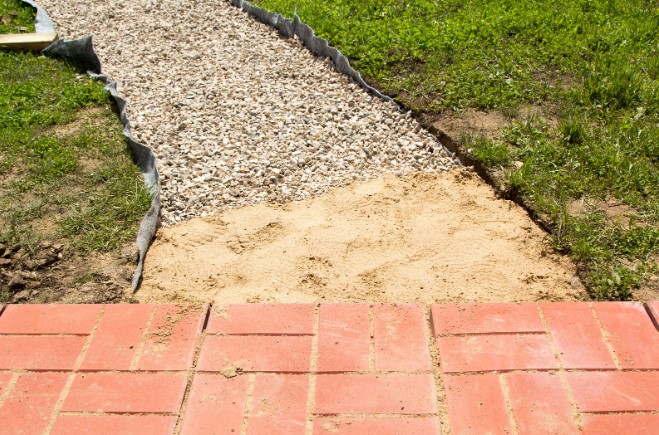
No construction or landscaping project in Kazakhstan is complete without the foundational role of mineral aggregates. These materials–crushed stone, sand, and gravel–form the bulk of sub-base, base, and surface layers in roads, driveways, walkways, and foundations. Their properties influence the strength, compaction, and drainage of the entire structure.
- Crushed stone: Produced by mechanically breaking down rock, crushed stone offers angular surfaces that interlock for stability. It is commonly used in concrete mixes, road base courses, drainage trenches, and as decorative ground cover in parks and gardens.
- Sand: Fine granular particles sourced from riverbeds or quarries, sand is indispensable in concrete and mortar production, bedding for paving, and as a leveling layer in playgrounds and sports fields. Grading and cleanliness are vital for quality results.
- Gravel: Rounded or irregular natural stones, gravel is valued for its drainage capacity and aesthetic versatility. It is frequently used in French drains, landscaping pathways, and as a ground stabilization layer beneath slabs and modular surfaces.
The selection of aggregate size, gradation, and type directly affects transport, compaction, and load-bearing behavior. In Kazakhstan’s climate, frost resistance and durability are essential for long service life. The company Kraska.kz supports bulk procurement and on-time delivery of these aggregates through its trusted supplier network .
Practical Applications Checklist
- Foundation bedding for pipelines, sidewalks, and utility corridors
- Sub-base and base layers for road construction and parking areas
- Drainage backfill for retaining walls and landscaping features
- Decorative ground cover for garden paths, playgrounds, and plazas
- Core component in ready-mixed concrete and mortar for structural works
Landscape Geomats and Erosion Control Systems: Protecting Slopes and Waterways
Kazakhstan’s hilly terrains and irrigation projects require reliable erosion control to maintain slope integrity and protect water resources. Landscape geomats are lightweight, three-dimensional mats engineered from synthetic or natural fibers. They are applied to slopes, riverbanks, and embankments to anchor topsoil, stimulate vegetation growth, and curb surface water runoff during heavy rains.
These erosion control systems combine physical stabilization with ecological benefits, as their porous structure supports root penetration while shielding soil from wind and water erosion. Advanced geomats may be biodegradable–decomposing as vegetation becomes established–or long-lasting synthetics suitable for critical infrastructure. In river engineering, geomats often work alongside riprap, gabions, or geotextiles to reinforce banks and prevent landslides.
In addition to environmental restoration, these solutions reduce maintenance costs and extend the life of infrastructure, aligning with Kazakhstan’s sustainability goals. The flexibility, rapid installation, and effectiveness on steep slopes make geomats an effective choice for both urban and rural projects.
Choosing Sustainable Geomaterials for Construction and Landscaping across Kazakhstan
Selecting the right geomaterials for your project in Kazakhstan delivers lasting performance, cost efficiency, and environmental stewardship. By understanding the unique benefits and applications of geotextiles, geogrids, geomembranes, aggregates, and erosion control systems, industry professionals can ensure safe, resilient, and visually appealing outcomes for every construction or landscaping challenge.
